
Writing
Notes on chores, credits and getting children to read.
Why the app exists, and what actually works when you are trying to make a routine stick. Written by the person who builds it.
The best chore apps for kids in 2026, and who each one is for
Nine chore and allowance apps, sorted by what each one is best at and where each falls short, written by the person who builds one of them.
The app I built so my children learn more than school asks
The founder story. A paper chart that could not settle an argument, and the rebuild that moved every family's data into their own iCloud.
Chore charts for children, and why they stop working
Paper charts and sticker systems fail in a predictable order. The missing piece is not the chart, it is the vanished reason behind each point.
What a children's allowance app costs, added up
The economics. What each plan comes to over a year, why credits are not pocket money, and what Reward Study Pro covers.
Reward systems that survive past week two
Why reward systems die in week two, what a record fixes, and why badges that take months beat badges that arrive in five minutes.
Maths practice that pays like any other task
Learning priced beside chores. Topics from addition to percentages, difficulty you set, and word problems written on the device.
Chores that get done without a third reminder
Every task in Reward Study carries a credit value, a category and a recurrence your child can see for themselves. Here is how the pricing works, and what the 100-task starter catalog covers.

The shop moves into the app, and can I have it ends
The reward shop lets a child see exactly what a reward costs, in credits they already have or are still earning. Redemption needs a parent's approval too, the same way a task does.

Why nothing counts until a parent taps approve
Nothing pays out in Reward Study without a parent's tap. The approvals queue is one screen, split into Waiting and History, with a note on every rejection and an undo on either action.

Five words that do more than the credits
Every approval in Reward Study can carry a one-tap word of praise, from a fixed set of five phrases, gender-neutral in all 12 languages. Two studies on praise and reward inform why the feature exists at all.
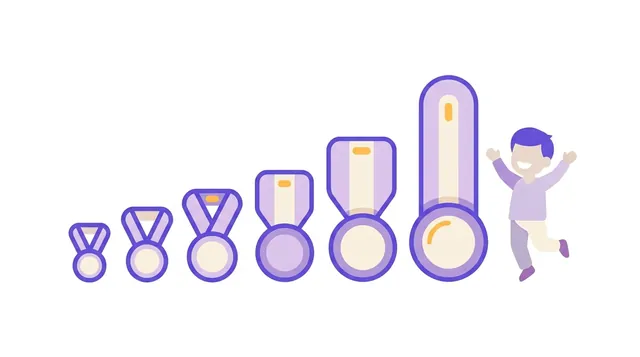
Badges that take months, not minutes
Streaks, levels and 44 badges measure the pattern behind a child's effort, not a single good day. Here is exactly how the thresholds work, and the 1.8.1 rule for credit you hand out yourself.
One credit equals what you decide
Reward Study never fetches an exchange rate. You decide what a credit is worth, once, in your own currency, and a 40-currency suggestion table gives you a sensible place to start.
Every credit has a reason written next to it
The balance is never a matter of memory. Every credit that moves, up or down, carries a reason your child can see, and Pro can export the whole history as a 9-column CSV behind your parent PIN.
Their side of the app, on your phone or theirs
A child can use Reward Study on a borrowed phone through Kid Mode, or on their own device through iCloud sharing. Here is exactly what each one shows, what it locks, and how Parent Lock keeps the rest of the app out of reach.
Two parents, one ledger, nobody pays twice
A co-parent joins the same household through an iCloud invitation, not a second account. See how the invitation works, why it never costs a second subscription, and why notifications differ by device.

Two homes, one child, one system in each
Separated parents can run two entirely separate households under one Apple Account, each with its own kids, tasks, rewards and ledger. Here is what changed with 2.0 and what stays separate between the two.
The scoreboard the whole room can see, and the three things it cannot do
The Apple TV app puts every child's balance and progress on the living-room screen, and reads straight from the same ledger the phone uses. It also cannot approve a task, change a balance, or buy a reward, and the app says exactly why.
Homework becomes a task with a price on it
The study generator turns Math practice into a task like any other, priced and approved the same way a chore is. Nineteen topics, four packs, three age bands each, and real numbers for how a set is sized.

Revising the chapter the exam is on
The study generator does not test science as a whole. Physics, Chemistry and Biology split into 19 chapter-sized areas, so a parent revising a child for one test can generate practice on that chapter alone.

Story word problems the parent reads first
Reward Study's word problems keep their exact numbers and answers, then get wrapped in a short story by an on-device Apple Intelligence model, in a theme the family picks, reviewed by a parent before a child ever sees it.
Print it, mark it, record the score
Reward Study can print any assigned study set two separate ways, with the answer key or without it, so practice can happen on paper and still record a score against the original task.
A family app with no account and no server
Reward Study has no accounts, no sign-in and no server run by its own developer. This post lays out exactly what that means, and states clearly where the reward.study website itself differs, on its own separate page.
What chore and allowance apps cost in 2026, checked on 20 September
A price table for the whole category, checked on one day against first-party sources. What is rising, why per-child billing is losing, and which apps would not tell me their price.
Try it free for 14 days.

iPhone, iPad and Apple TV. Requires iOS 17 or later.
Free for 14 days, then $39.99 a year.